 |
| Federal Government |
The American Civil War was sparked by a series of events, each caused by the longstanding issues that America had faced since the beginning of its creation. Americans began to take sides figuratively and literally as the North and South drifted apart.
 Federal Government’s Authority vs. States’ Rights:
Early on, from the beginning of America, there had been problems regarding the Federal Government and State's power. It was first addressed in McCulloch v. Maryland where Chief Justice Marshall said that Federal power was dominant. In 1798, the Kentucky and Virginia resolutions said that states had the power to nullify federal law. This problem reached a high before the Civil War during the Nullification Crisis of 1832. The state of South Carolina said that the tariff of 1828 did not apply to them. Andrew Jackson threatened military action against the State and South Carolina threatened to secede. These actions of the Federal Government and the Southern States' foreshadowed the Civil War. http://www.gilderlehrman.org/history-by-era/age-jackson/resources/nullification-crisis In this website, the specific details of the nullification crisis and basic history of tariffs in the United States is explored.
| Cotton Gin |
Economic Changes:
The economy at the time was very different in terms of the different sections of the country that were being formed. The northern part of the country focused on factories to sustain their economy. Their industrial boom did not spread to the desires of the South which got revenue through plantations. The South relied more on slavery after the invention of the cotton gin which made plantation farming more efficient. Each area of the country economically grew, but separately. http://inventors.about.com/od/cstartinventions/a/cotton_gin.htm This website provides some insight on Eli Whitney, the creator of the cotton gin. It highlights the importance of the invention in the Southern economy and the life of Eli Whitney.
The Compromise of 1850:
Henry Clay, a Kentucky Statesman wrote this in order to bring peace. This Compromise attempted to play in favor of both the North and South. It had 5 parts including California's admittance as a Free State, allowing for New Mexico and Utah to be a free or slave state based on popular sovereignty, The Republic of Texas receiving $10 million to pay its debts to Mexico, the slave trade was abolished in the District of
| Henry Clay: The Great Compromiser |
Kansas-Nebraska Act and Bleeding Kansas:
 |
| The Kansas-Nebraska Act |
John Brown murdered 5 pro-slavery supporters as well. http://www.loc.gov/rr/program/bib/ourdocs/kansas.html The library of Congress provides all documents related to the Kansas-Nebraska Act.
.jpg/596px-Dred_Scott_photograph_(circa_1857).jpg) |
| Dred Scott |
Dred Scott Decision:
Dred Scott was a Virginia-born slave that sued for his right of freedom in 1857. His claim was that he and his master had moved to a free-state and that he was no longer a slave. The supreme court ruled against him in saying that no African American could become a citizen. Also, Chief Justice Taney ruled that the Missouri Compromise was unconstitutional and that slavery could exist anywhere. http://www.historyplace.com/lincoln/dred.htm This article discusses the life of Dred Scott prior to the case as well as the reactions of many people to the result of the case.
Lincoln-Douglas Debates:
 |
| Lincoln vs. Douglas |
controversial. Douglas won, but Lincoln helped inspire the Republican party and sharped their ideals.
http://www.britannica.com/EBchecked/topic/341764/Lincoln-Douglas-debates Each of the 7 debates between these two Illinois' men are explored here.
John Brown’s Raid on Harper’s Ferry:
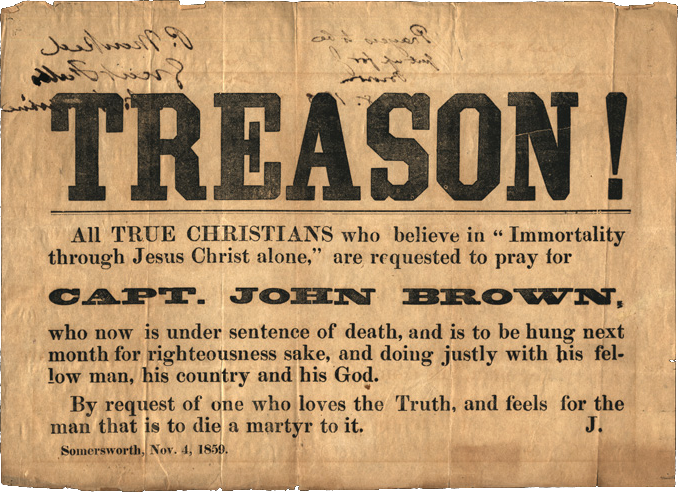 John Brown raided Harper's Ferry, Virginia in October 1859. He was considered to be God's Prophet and the one to remove slavery from the world. He attacked with his 22 men and took hold of the federal arsenal and armory in Harper's Ferry. The neighboring slaves did not join him so he was defeated and put on trial for treason. His sentencing to be hung got a massive amount of sympathy from many Northern people. This made the South uneasy. They regarded abolitionists, Republicans, and the entire North against them.
http://investigatinghistory.ashp.cuny.edu/m5.html The life of John Brown from his birth to his hanging is described in this article.
Election of 1860:
This election was the final act that drove the South to secede from the Union. The two sections of North and South were essentially having two separate elections as the main choices for the North were the Republican Lincoln and the Democratic Douglas, and the South had their choice between Bell and Breckinridge. The Republicans ended up having very popular ideals and swept a majority of the North. Lincoln won causing the South to meet and discuss immediate secession from the Union. http://www.270towin.com/1860_Election/ The statistics of the election of 1860 are shown here.
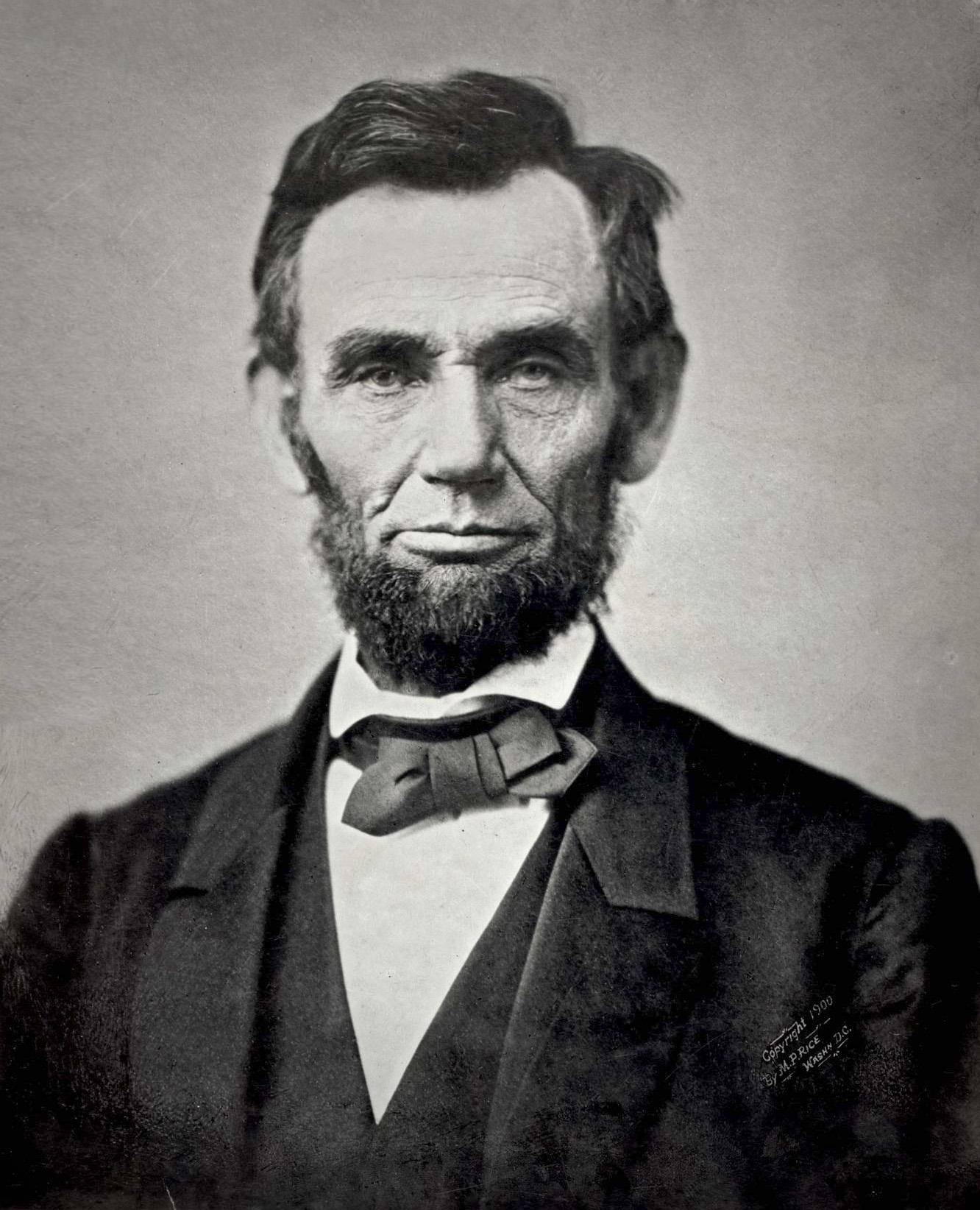 |
| Abraham Lincoln |
This video, "The Causes of The Civil War Music Video", helps illustrate all the important aspects of the beginnings of a torn nation. The video helps put history in a fun, memorable and catchy way. All of the points that I have discussed are given in this video.

No comments:
Post a Comment